Go to content

Albums - TheBeatles-Unlimited

Skip menu
Skip menu

Albums

Beatles Guide
Explore the core UK studio albums, key international variations and essential compilations in one clear, fan-friendly place. Start with a quick overview, then dive into detailed notes, track highlights and solo connections.

This guide focuses on the official UK Beatles album catalogue, while also mentioning major international variations and a few key compilations when they matter for fans. It is created by fans for fans and is not an official publication.

Release dates, track listings and chart details are compiled from trusted sources such as thebeatles.com and standard discographies, but may be simplified to keep things readable. Always cross-check if you need fully authoritative data.

Use this page as your hub: skim the overview table, then scroll down or tap through to read mini-guides for each album and see how the songs connect to later solo careers.

Core UK studio albums and key releases
YearAlbumEraQuick note
1963Please Please MeEarlyDebut rush-recorded in one historic day.
1963With The BeatlesEarlyHarder, tighter follow-up with bold cover art.
1964A Hard Day’s NightEarlyFirst all-original album, tied to the film.
1964Beatles For SaleEarlyTour-weary mix of originals and covers.
1965Help!TransitionalFrom pop soundtrack to deeper songwriting.
1965Rubber SoulTransitionalFolk-rock textures and more adult lyrics.
1966RevolverStudio revolutionStudio experimentation explodes.
1967Sgt. Pepper’s Lonely Hearts Club BandStudio revolutionConceptual, colourful and hugely influential.
1967Magical Mystery TourStudio revolutionOriginally a UK double EP, later a key LP in the US and worldwide.
1968The Beatles (White Album)LateSprawling double LP of contrasting styles.
1969Yellow SubmarineLateHalf Beatles songs, half George Martin film score.
1969Abbey RoadLatePolished studio farewell with iconic medley.
1970Let It BeLateRecorded earlier, released last; back-to-basics project.
19731962–1966 & 1967–1970CompilationsThe classic “Red” and “Blue” collections for casual listeners.
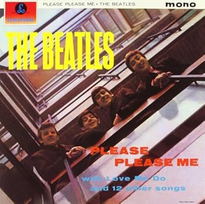
Please Please Me (1963)

)
Release: Debut UK album, recorded mainly in one legendary day at EMI’s Abbey Road Studios.
Key tracks: I Saw Her Standing There, Please Please Me, Love Me Do, Twist And Shout.
Why it matters: Captures the raw Cavern Club energy on tape and shows how tight the live band already was.
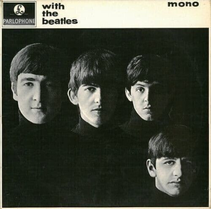
With The Beatles (1963)


Release: Second UK LP, recorded while Beatlemania exploded.

Key tracks: All My Loving, It Won’t Be Long, Money, You Really Got A Hold On Me.
Why it matters: Darker cover, punchier sound and more confidence in both originals and covers.
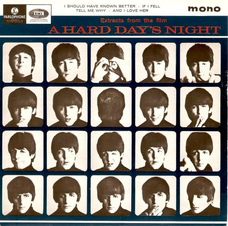
A Hard Day’s Night (1964)


Release: Soundtrack to the first Beatles feature film, all Lennon–McCartney originals.

Key tracks: A Hard Day’s Night, If I Fell, And I Love Her, Can’t Buy Me Love.
Why it matters: Proves they could carry a full album of originals and dominate cinema at the same time.
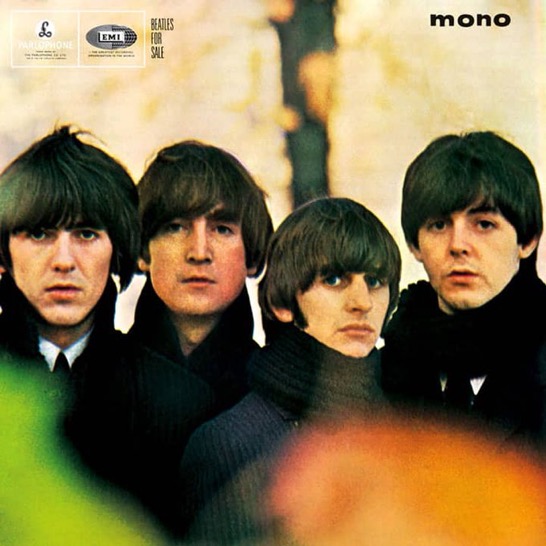
Beatles for sale

Release: December 4, 1964, in the UK. The album reflects the band's hectic touring period and fatigue,
featuring a mix of eight original songs and six covers (including Chuck Berry and Buddy Holly).
Key tracks: Well-known songs include "No Reply," "I'm a Loser," and "Eight Days a Week."
Why it matters:
Proves they could carry a full album of originals and dominate the top 40 list with all their releases

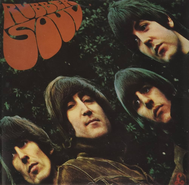
Rubber Soul (1965)


Release: Recorded quickly at the end of 1965 but feels like a creative leap.
Key tracks: Norwegian Wood, In My Life, Drive My Car, Nowhere Man.
Why it matters: Lyrics deepen, sounds widen and the studio becomes a more flexible tool.
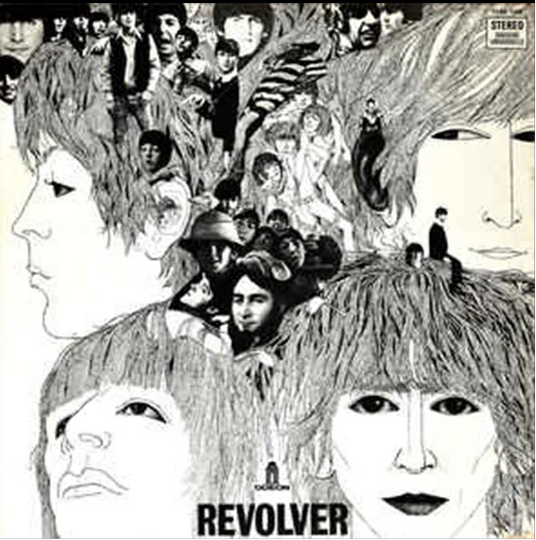
Revolver (1966)

  
Release: Recorded before the final tour; the point where live performance could no longer keep up with the studio.
Key tracks: Taxman, Eleanor Rigby, Tomorrow Never Knows, Here, There And Everywhere.
Why it matters: Tape loops, backwards recording and bold arrangements changed what a rock album could be.
For longer reading on key albums like Revolver and Abbey Road, check out our Album Deep Dives section, where we go track-by-track with more studio stories and fan trivia.

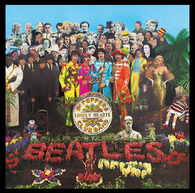
Sgt. Peppers lonely hears club band (1968)

Release: Released on June 1, 1967,
Sgt. Pepper's Lonely Hearts Club Band
is the Beatles' eighth studio album, widely regarded as a landmark in popular music that defined the "Summer of Love"It functioned as an early concept album where the band adopted alter-egos to explore psychedelic,
Key tracks: "She's Leaving Home", "Being for the Benefit of Mr. Kite", When I'm Sixty-Four
Why it matters: experimental sounds, largely abandoning touring to focus on innovative studio production

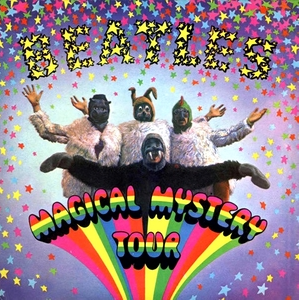
Magical Mystery tour (1967)

Realese: December  8,1967
That was released as a double EP in the United Kingdom and an LP in the United States.
Key tracks: "Your Mother Should Know", "The Fool on the Hill", "I Am the Walrus"
Why it matters: Recording then took place alongside filming and editing, and as the Beatles furthered their public association with Transcendental Meditation under teacher Maharishi Mahesh Yogi.

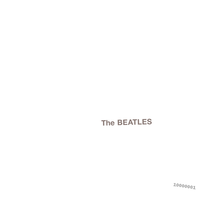
White Album (1968)

Realese: November 22, 1968.
The album is recognized for its fragmentary style and diverse range of genres, including folk, country rock, British blues, ska, music hall, hard rock, and avant-garde. It has since been viewed by some critics as a postmodern work, and is widely regarded as one of the greatest albums of all time.
Key tracks;   "back in the USSR", "Dear Prudence", "Ob-La-Di, Ob-La-Da" "While My Guitar Gently Weeps"
Why it matters: Only 16 of the album's 30 tracks feature all four band members performing. Several backing tracks do not feature the full group, and overdubs tended to be performed by the song writer. McCartney and Lennon sometimes recorded simultaneously in different studios with different engineers.

Yellow Sub Marine (1969)

Realese: January, 13 1969
The project was regarded as a contractual obligation by the Beatles, who were asked to supply four new songs for the film. Some were written and recorded specifically for the soundtrack, while others were unreleased tracks from other projects.
Key tracks:  "Yellow Submarine", "All Together Now", "All You Need Is Love"
Why it matters: The film received its worldwide premiere in London in July 1968, by which time the Beatles were busy working on their self-titled double album, commonly called "the White Album". After viewing the finished film, the Beatles were much more enthusiastic and did more to associate themselves with it after its release.

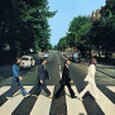
Abbey Road (1969)

Release: September 25, 1969

It is the last album the group recorded, although Let It Be (1970) was the last album completed before the band's break-up in April 1970. Abbey Road was mostly recorded in April, July and August 1969, and topped the record charts in both the United States and the United Kingdom.
Key tracks: "Come Together", "Something", "Here Comes the Sun", "Because".
Why it matters: "The End" features Starr's only drum solo in the Beatles' catalogue (the drums are mixed across two tracks in "true stereo", unlike most releases at that time where they were hard-panned left or right). Fifty-four seconds into the song are 18 bars of lead guitar: the first two bars are played by McCartney, the second two by Harrison, and the third two by Lennon, and the sequence is repeated two more times


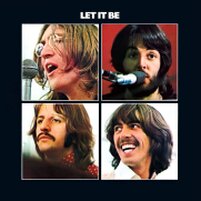
Let it Be (1970)

Release: may 8, 1970
Concerned about recent friction within the band, Paul McCartney had conceived the project as an attempt to reinvigorate the group by returning to simpler rock 'n' roll configurations. Its rehearsals started at Twickenham Film Studios on 2 January 1969 as part of a planned television documentary showcasing the Beatles' return to live performance.
Key tracks: "Across the Universe", "Let It Be", "The Long and Winding Road", "Get Back".
Why it matters: Concerned about the friction over the previous year, Paul McCartney was eager for the Beatles to perform live again.
In early October 1968, he told the press that the band would soon play a live show for subsequent broadcast in a TV special.
The following month, Apple Corps announced that the Beatles had booked the Roundhouse in north London for 12–23 December and would perform at least one concert during that time...

Explore albums by era

On this site we treat the UK albums as the “core” story and mention important US and international variations when they change the track list in a big way (for example, the US Magical Mystery Tour LP becoming the worldwide standard).

To follow the Beatles’ journey, you can read the albums in strict release order, or jump into a specific era that you love – early Beatlemania, mid 60s experimentation or the later, more individualistic records.

Singles, EPs and film soundtracks sometimes sit slightly outside the album flow. Our dedicated Singles Guide and Films & Concerts pages fill in those gaps so you can see where every song and performance fits.


Official sources and fan disclaimer

For the most authoritative discography details, artwork and official statements, visit the official site at thebeatles.com. Standard reference books and well-known discography sites can also help if you need matrix numbers, label variations and other deep collecting info.

TheBeatles-Unlimited is an independent, fan-run community and is not affiliated with The Beatles, Apple Corps or the existing Beatles Unlimited fanclub. We do our best to keep information accurate, but this guide is meant as an accessible starting point for fans rather than a formal historical document.

Created by: Ultimateman
Back to content
Application icon
TheBeatles-Unlimited Install this application on your home screen for a better experience
Tap Installation button on iOS then "Add to your screen"